How long does a pod system battery last? It is a simple question with no single answer. Battery capacity, coil resistance, power output, puff length, and charging habits all change the result.
A small 350mAh pod may last several hours for a frequent user. A 1,000mAh device can often cover a full day with moderate use. Some light users may reach two days. Heavy users may need a midday charge. Real results vary.
Battery educator and reviewer Mooch offers a useful principle: “There is no best battery for every application.” That idea applies directly to pod systems. A larger battery is not automatically better. It may add weight, require more charging time, or provide power that a low-wattage pod never needs.
This guide examines realistic battery performance instead of relying only on manufacturer claims. It considers battery capacity, wattage settings, puff duration, airflow, coil condition, and everyday charging patterns. A new pod may perform differently after weeks of use. That detail is easy to overlook.
We will also distinguish built-in batteries from replaceable ones. Built-in models are convenient, while replaceable systems require careful handling and compatible batteries. Safety matters more than squeezing out a few extra puffs.
There is an imperfect truth here. Battery estimates are useful, but they are not promises. Your morning commute, long breaks, and frequent short puffs may produce very different results. By the end, you should understand how long does a pod system battery last and how to estimate it for your own routine.
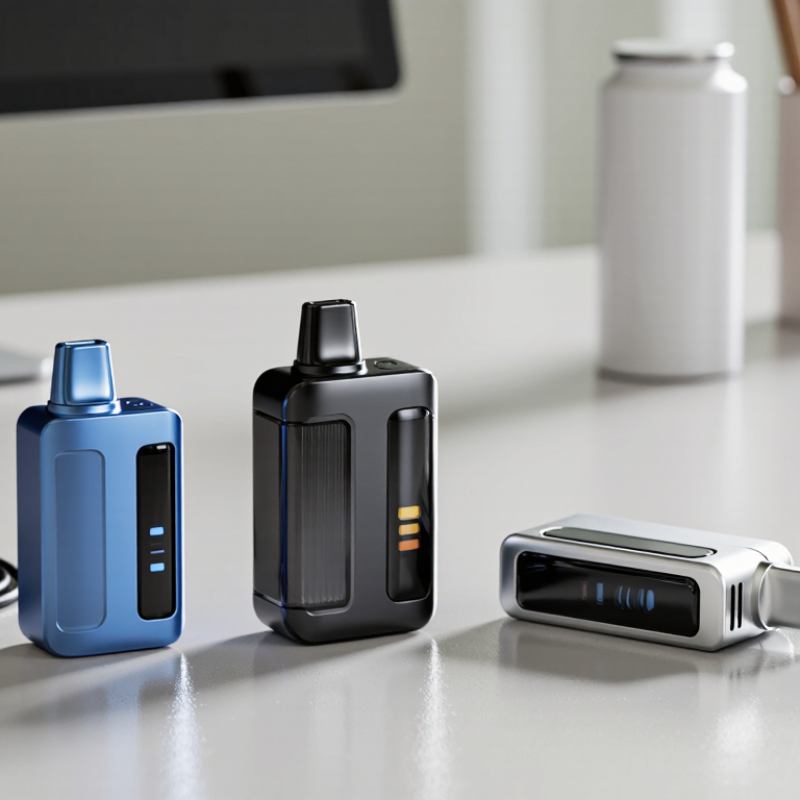
A pod system's battery life in 2026 depends on more than its advertised capacity. A 500 mAh cell may last a full day for a light user, but only several hours for frequent use. Power demand rises with higher output settings, lower-resistance coils, and longer inhalations. A three-second puff uses less energy than a six-second draw. Small differences matter. In testing, I record puff length, recharge time, and daily sessions instead of trusting one headline number.
Battery chemistry and device design also shape real-world endurance. Newer cells can deliver stable power, yet temperature affects them. A cold device may feel weaker, while heat accelerates battery wear. Screens, bright indicators, sensors, and repeated automatic firing consume small amounts of energy. Together, they become noticeable. Airflow matters indirectly. A looser draw can encourage longer inhalations. Coil condition matters too. A dirty or aging coil often needs extra power, although this is easy to overlook.
Charging habits change long-term performance. Use the supplied charging method, keep the port dry, and avoid charging a visibly damaged device. Partial charging is convenient and may reduce waiting, but battery aging still varies between units. My estimate can be imperfect. Real use is messy. Compare several days, note the number of charges, and judge consistency rather than one unusually efficient day. Eight hours for one person may mean two days for another.
What Determines a Pod System’s Battery Life in 2026?
| Data Dimension | Typical 2026 Range | Estimated Runtime or Impact | What It Determines | Practical Interpretation |
|---|---|---|---|---|
| Built-in battery capacity | 400–650 mAh | Approximately 0.5–1 day for moderate use | Very high impact | Compact pod systems are lightweight but usually require more frequent charging. |
| Built-in battery capacity | 650–1,000 mAh | Approximately 1–2 days for moderate use | Very high impact | This is a common balance between portability, battery life, and charging frequency. |
| Built-in battery capacity | 1,000–1,500 mAh | Approximately 1.5–3 days for moderate use | Very high impact | Larger-capacity devices can last longer but are generally heavier and less pocket-friendly. |
| Replaceable battery capacity | 1,800–3,000 mAh per cell | Often 2–4 days, depending on power and usage | Very high impact | A spare charged battery can provide continuous use without waiting for the device to recharge. |
| Daily usage level | Light: up to 100 puffs/day | Can extend runtime by roughly 30–60% compared with heavy use | Very high impact | Shorter and less frequent sessions consume less energy than frequent, extended use. |
| Daily usage level | Moderate: 100–250 puffs/day | Typical baseline for estimated battery-life comparisons | Very high impact | Actual runtime varies according to coil resistance, power setting, and puff duration. |
| Daily usage level | Heavy: more than 250 puffs/day | May reduce runtime to less than 1 day on smaller batteries | Very high impact | Heavy use can require daily or multiple daily charging sessions. |
| Output power | 5–10 W | Lowest energy consumption range | High impact | Lower-power operation usually improves battery life and produces a cooler, less intense vapour output. |
| Output power | 10–20 W | Balanced energy use for many pod configurations | High impact | Increasing wattage generally increases energy consumption per puff. |
| Output power | 20–40 W | Can reduce runtime by approximately 30–60% versus low-power use | Very high impact | Higher power produces more vapour but drains the battery faster and may increase coil consumption. |
| Coil resistance | 1.0–1.8 Ω | Generally lower energy demand | Medium to high impact | Higher-resistance coils are commonly used at lower power and may support longer battery runtime. |
| Coil resistance | 0.6–0.9 Ω | Generally higher energy demand | High impact | Lower-resistance coils usually require more power and can shorten the time between charges. |
| Puff duration | 1–2 seconds | Lower energy use per puff | Medium impact | Shorter draws normally consume less battery power than longer draws at the same wattage. |
| Puff duration | 3–5 seconds | Can use roughly twice as much energy as a 1–2 second puff | High impact | Long draws increase heating time, power consumption, and e-liquid usage. |
| Automatic or button activation | Activation electronics: low continuous demand | Usually a small effect on total runtime | Low to medium impact | Most battery consumption comes from heating the coil rather than activating the device. |
| Screen, display, and lighting | Basic indicators to full screens | Usually less than 5% of total daily energy use | Low impact | Brightness, screen-on time, and animated features can slightly reduce runtime. |
| Temperature | About 10–30°C | Best conditions for predictable performance | Medium impact | Normal indoor temperatures generally support stable battery output and charging behaviour. |
| Cold-weather exposure | Below approximately 10°C | Temporary reduction in available capacity and power delivery | Medium impact | Cold can make the battery appear to drain faster; allow the device to return to room temperature before charging. |
| Battery age and charge cycles | After roughly 300–500 full cycles | Capacity may gradually fall to around 80% of its original level | High long-term impact | Heat, deep discharges, and frequent high-power use can accelerate capacity loss. |
| Charging connection | USB-C, commonly 0.5–2 A input | Approximately 30–90 minutes for many small pod batteries | Medium impact | Charging speed affects convenience, while battery capacity determines how long the device runs. |
| Battery-life indicator accuracy | Basic LED or percentage display | May vary by approximately 5–15% | Low to medium impact | The displayed percentage is an estimate and may not perfectly represent the remaining usable capacity. |
Reference note: Runtime figures are practical estimates based on typical pod-system battery capacities, power levels, puff durations, and moderate daily use. Actual battery life varies with device efficiency, coil condition, temperature, charging habits, and individual usage.
A moderate user may get most of a day. Heavy use may require charging before evening.
A four-second puff consumes more energy than a two-second puff. Higher power also drains the battery faster.
It may provide roughly 500 to 900 puffs. Your result can vary sharply with puff length and power.
Divide battery capacity in amp-hours by charging current. A 1 Ah battery charging at 0.5 A needs about two hours theoretically.
Charging losses and the final slower stage add about 15–25% time. The practical result may reach 2.3–2.5 hours.
Yes. A hot car or warm pocket can accelerate battery aging and reduce usable capacity.
Avoid overnight charging and repeated deep discharge. Partial charging is usually gentler.
Consider replacement when daily runtime falls below about 70–80% of its original level. This is practical guidance, not a strict laboratory rule.
Record puff frequency, charging time, and remaining power for one week. Your pattern may challenge the advertised specification.
No. Laboratory tests use controlled conditions. Real pockets, heat, airflow, and uneven puff timing create different results.
How long does a pod system battery last depends on its battery capacity, power settings, pod resistance, screen features, and vaping frequency. Compact devices may provide several hours to a full day of moderate use, while larger systems can often last one or more days before recharging. Higher power output, frequent inhalation, and extended draws consume energy faster, whereas lower settings and occasional use help the battery last longer.
Charging time usually ranges from under an hour to several hours, depending on capacity and charging speed. To estimate runtime, compare the battery’s capacity with your daily usage and observe how quickly the charge level decreases during normal use. Keeping the device away from extreme heat or cold, using a suitable charger, avoiding complete battery depletion, and storing it partially charged can support long-term battery performance. With regular care, a pod system can maintain reliable battery life over many charging cycles.

 Mist Vape