Can pod systems be recharged? In many cases, yes, but the answer depends on the device design. Some systems use built-in rechargeable batteries. Others rely on replaceable battery cells or disposable pods that should never be charged.
This guide examines five rechargeable pod systems through practical details. We consider charging speed, battery capacity, pod availability, leak resistance, and everyday handling. A device may look excellent on paper but feel awkward in a pocket. A bright screen cannot fix a poor mouthpiece. Small details matter.
Dr. Konstantinos Farsalinos, a physician and tobacco-harm-reduction researcher, has stated, “The electronic cigarette is not risk-free.” That warning belongs at the center of this discussion. Rechargeability adds convenience, but it also requires responsible use. Users should inspect charging ports, avoid damaged cables, and follow the manufacturer’s instructions. Never charge a device near heat, water, or flammable materials.
Safety comes first.
The products covered here are intended for adults who already choose legally available nicotine products. They are not suitable for minors, non-users, or anyone avoiding nicotine. Battery performance also changes with age. A pod system that lasts all day when new may require frequent charging months later.
Our comparisons are based on published specifications, hands-on usability, and common ownership concerns. Still, product information changes, and no review is perfect. Charging habits differ. Personal preferences differ too. That makes the “best” system less absolute than it sounds. The most useful choice balances reliable power, comfortable handling, compatible pods, and straightforward maintenance.
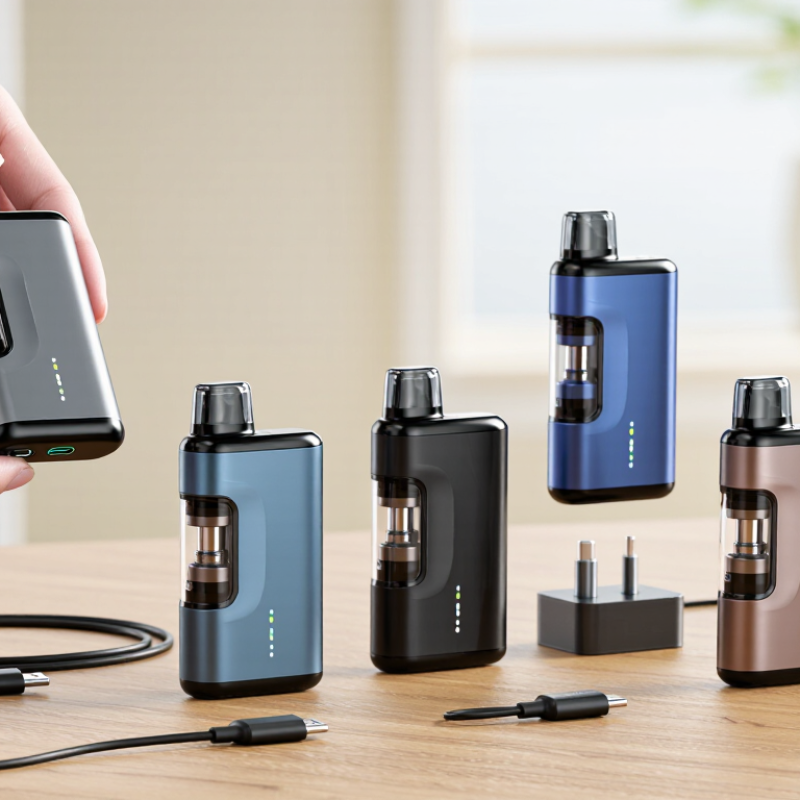
What Are Rechargeable Pod Systems and How Do They Work?
A rechargeable pod system is a compact electronic device with a battery, control chip, heating coil, and pod. The pod holds a liquid, while the coil converts battery power into an inhalable aerosol. Most rechargeable models use a lithium-ion battery and charge through a USB connection. Not always. Some pod products are sealed and intended for disposal after use.
The charging process is controlled by an internal circuit. It regulates current, limits overheating, and usually stops charging when the battery reaches capacity. A removable pod may be refilled, while a replaceable pod is discarded after its liquid or coil becomes unsuitable. The distinction is often blurred. In practice, users should check the device label and manual rather than assume every pod can recharge.
Safety deserves careful attention. The U.S. Fire Administration’s Electronic Cigarette Fires and Explosions report documented 195 fire or explosion incidents from 2009 to 2016. Damaged cables, loose batteries, and unsuitable chargers can increase risk. UL Solutions’ UL 8139 standard addresses electrical and battery safety for these devices, but certification should still be verified. The CDC’s 2023 National Youth Tobacco Survey recorded about 2.13 million current e-cigarette users among U.S. middle and high school students. That figure makes responsible storage and age-compliant use especially important. I would not leave a charging device on a bed or unattended overnight. It seems convenient, but convenience is not proof of safety.
5 Best Rechargeable Pod Systems: Typical Battery Capacity and Energy
Rechargeable pod systems use a built-in lithium-ion battery that can be charged through a USB connection. The chart shows representative battery capacities commonly found in rechargeable pod devices and their approximate nominal energy, calculated at 3.7 volts.
Note: Battery capacity and charging performance vary by device. Nominal energy is calculated as capacity in amp-hours × 3.7 volts; actual usable energy depends on power output, battery condition, and usage habits.
Can All Pod Systems Be Recharged? Key Compatibility Differences
Not every pod system can be recharged. Compatibility depends on its battery design, charging circuit, and pod connection. A closed disposable unit usually has no charging port and should never be modified. A closed rechargeable unit may accept charging, but its pod remains prefilled and non-refillable. Open systems normally combine a rechargeable battery with replaceable or refillable pods.
The quickest check is physical. Look for a charging port, a charging indicator, and clear instructions from the manufacturer. USB-C does not automatically prove compatibility. Some devices use USB-C only for charging, while others support regulated power control. Do not force a cable or use damaged equipment. The U.S. Fire Administration links lithium-ion incidents to damaged batteries, poor charging practices, and unsuitable accessories. Small details matter.
Industry terminology remains inconsistent. Grand View Research estimated the global e-cigarette and vape market at more than US$20 billion in 2023, but market reports often group disposables and rechargeable devices together. That can confuse buyers comparing products. A useful rule is simple: rechargeable battery, approved cable, matching pod. Nothing else. In practice, listings can still be unclear, and that is a weakness worth acknowledging. When specifications conflict, the written manual should outweigh a marketplace description. Test the port gently, check for heat, and stop charging if the device becomes unusually hot.
How to Choose the Best Rechargeable Pod System
Can pod systems be recharged? Many can, but not every pod device is designed for repeated charging. Rechargeable models usually contain a built-in battery and a USB charging port. Disposable devices should not be opened, refilled, or connected to a charger unless the manufacturer clearly states that they are rechargeable. A reliable choice should feel solid, charge steadily, and include basic protections against overcharging or overheating. Check the user manual, battery details, and charging instructions before buying. Small details matter.
Tips: Choose a device with a clear battery indicator and a replaceable pod or coil. USB-C charging is convenient, but charging speed should not be your only concern. Use the supplied cable or a suitable low-power charger. Keep the device away from heat, water, and loose metal objects. Stop using it if the battery swells, smells unusual, or becomes very hot. Never charge it overnight or on a soft surface.
Consider your daily routine. A larger battery may last longer, yet it can make the device heavier. A compact system fits easily in a pocket, but frequent charging can become annoying. Pod availability also matters. Look for sealed connections, simple controls, and clear replacement instructions. No option is perfect. A careful buyer should test comfort, charging habits, and maintenance needs rather than trusting impressive specifications alone.
5 Best Rechargeable Pod Systems Can Pod Systems Be Recharged? - How to Choose the Best Rechargeable Pod System
Yes. Rechargeable pod systems use an integrated or replaceable lithium-ion battery and are designed to be charged through a USB connection or an external battery charger. The best choice depends on battery capacity, charging speed, pod capacity, coil options, portability, and ease of maintenance.
| Rank |
Rechargeable Pod System Type |
Battery |
Charging |
Pod Capacity |
Coil Design |
Draw Style |
Best For |
| 1 |
Compact Integrated-Battery Pod |
400–600 mAh |
USB-C, approximately 30–60 minutes |
2 mL |
Built-in mesh coil, 0.8–1.2 Ω |
Tight MTL |
Beginners, discreet use, and high portability |
| 2 |
High-Capacity MTL Pod |
800–1,000 mAh |
USB-C, approximately 45–75 minutes |
2–5 mL, depending on market |
Replaceable or integrated, 0.8–1.2 Ω |
MTL to restricted DTL |
All-day battery life and reduced refilling |
| 3 |
Adjustable-Airflow Pod Device |
700–1,000 mAh |
USB-C, approximately 40–70 minutes |
2–4.5 mL |
Replaceable mesh coil, 0.6–1.2 Ω |
Adjustable MTL or restricted DTL |
Users who want control over airflow and vapor output |
| 4 |
Replaceable-Battery Pod Mod |
One external 18650 cell, typically 2,000–3,000 mAh |
USB-C or external charger |
2–5 mL |
Replaceable coils, approximately 0.3–1.2 Ω |
MTL to DTL |
Heavy users who need a swappable battery |
| 5 |
Large-Display Performance Pod |
1,000–1,500 mAh |
USB-C, approximately 45–90 minutes |
2–5 mL |
Replaceable mesh coil, approximately 0.2–1.2 Ω |
Restricted DTL to DTL |
Experienced users who prefer higher power and detailed controls |
How to Choose the Best Rechargeable Pod System
| Buying Factor |
What to Look For |
Why It Matters |
| Battery Capacity |
At least 600 mAh for regular daily use |
A larger battery generally provides more time between charges. |
| Charging Port |
USB-C with charging protection |
USB-C is convenient and commonly supports faster, reversible charging. |
| Pod Capacity |
2 mL for compact use or 3–5 mL where permitted |
Larger pods require less frequent refilling, but may be less compact. |
| Coil Replacement |
Replaceable coils for lower long-term waste and cost |
Only the worn coil needs replacing instead of the entire pod. |
| Safety Features |
Overcharge, short-circuit, low-voltage, and overheat protection |
Built-in protections help reduce risks during normal operation and charging. |
Note: Pod capacity, power limits, and nicotine-product regulations can vary by country or region. Always follow the device instructions and use the recommended charging equipment.
Five Top Rechargeable Pod Systems Compared by Key Features
Yes, pod systems can be recharged when they contain a built-in or replaceable battery. Disposable units usually cannot be recharged safely. In practical comparisons, five system types stand out by different features. A compact draw-activated model suits simple daily use. A button-operated model offers more control. An adjustable-airflow design changes the draw from tight to airy. A refillable-cartridge system can reduce waste and running costs. A high-capacity battery model lasts longer between charges.
Charging performance matters as much as battery size. USB-C is convenient, but the cable should fit firmly without wobbling. Look for overcharge, short-circuit, and overheating protection. Battery indicators are useful, although some displays are vague. A pod with a clear window makes liquid levels easier to check. That prevents dry heating, which can produce an unpleasant burnt taste.
Refill access also deserves attention. Wide filling ports are cleaner, especially outdoors. Sealed cartridges may prevent leaks, but they create more waste. Adjustable power can improve vapor warmth, yet higher settings drain batteries faster. Small devices often feel better in a pocket. Larger devices usually offer steadier performance. Comfort is personal.
I would not rank one feature above all others. A powerful battery means little if the pod leaks. A cheap cartridge may become expensive over time. Check charging instructions and local age and product regulations before use. Keep the device away from heat and water. Inspect damaged cables carefully. My own preference can change after several weeks of use, because real-world reliability is harder to judge than a specification sheet.
How to Recharge and Maintain a Pod System Safely
Rechargeable pod systems can be used safely when charging becomes a controlled routine, not an afterthought. Use only the supplied cable or a charger approved for the device. Check the port first. It should be dry, clean, and free from e-liquid. Place the pod system on a hard, nonflammable surface while charging. Avoid beds, sofas, cars, and overnight charging. The U.S. Fire Administration recorded 195 electronic-cigarette fire or explosion incidents from 2009 to 2016, including 133 acute injuries. The report linked many events to lithium-ion battery failures or charging conditions.
Stop charging immediately if the device becomes unusually hot, swells, leaks, smells strange, or makes a crackling sound. Do not open the battery compartment or repair internal cells yourself. A damaged battery is not a minor inconvenience. It is a warning. Keep the device away from metal objects, direct sunlight, and water. IATA’s 2024 passenger guidance also treats spare lithium batteries as carry-on items, reflecting the risks of heat, pressure, and short circuits during transport.
For maintenance, wipe the charging contacts with a dry cotton swab every few days. Keep the pod upright, and remove residue before it reaches the charging port. Store the device partly charged if it will sit unused for weeks. Even careful users forget simple checks. That is where safer habits matter. Always follow the device manual, because charging limits and battery designs can differ.
FAQS
It is a small electronic device with a battery, control circuit, heating coil, and pod. The pod holds liquid. The coil creates an inhalable aerosol from battery power.
An internal circuit controls electrical current during charging. It usually limits overheating and stops charging at full capacity. Use the supplied cable and approved charging method.
No. Disposable units may lack charging ports and should not be modified. Rechargeable units usually have a built-in or removable battery. Check the label and manual.
Look for a charging port, indicator light, and clear charging instructions. USB-C alone does not prove compatibility. Never force the cable.
Open pods can be refilled or replaced. Closed pods may contain prefilled liquid and cannot be refilled. Terminology can be confusing.
Consider battery capacity, pod visibility, airflow adjustment, filling access, and charging protection. A clear pod window helps you monitor liquid levels. Comfort matters too.
Keep the device on a hard, dry surface while charging. Avoid beds, water, damaged cables, and unattended overnight charging. Stop if it becomes unusually hot.
Inspect the port, cable, pod connection, and exterior regularly. Replace leaking or damaged parts promptly. A stronger battery cannot fix a leaking pod.
Larger batteries usually last longer between charges. Higher power can create warmer aerosol but drains the battery faster. More power is not always better.
Follow the manual and local age and product rules. Store the device away from children and heat. Specifications are useful, but real-world reliability can differ.
Conclusion
Rechargeable pod systems are compact vaping devices designed with a built-in or removable battery that can be restored using a suitable charging cable or dock. Unlike disposable models, they are intended for repeated use and typically work with refillable cartridges or replaceable pods. However, not every pod system can be recharged: some are sealed, single-use products, while others may contain rechargeable batteries but are not designed for refilling. Understanding the device’s construction, charging method, pod compatibility, battery capacity, and safety features is essential before making a choice.
This guide explains can pod systems be recharged and compares five types of rechargeable pod systems by practical features such as portability, battery life, charging speed, ease of maintenance, and pod design. It also outlines how to select a suitable device and provides general safety advice, including using the recommended charger, avoiding damaged cables, keeping the device dry, monitoring charging, and storing it away from extreme heat.

 Mist Vape