A vape cartridge may look like a small glass tank, but its contents are not always obvious. Knowing what is inside a vape cartridge starts with the information printed on its packaging, not guesses based on color or thickness. Read the ingredient list, product description, manufacturer details, and batch or lot number. Check that the package is sealed and that its information is clear and consistent. A faint label or missing details deserves caution. So does a cartridge that leaks, has a cracked mouthpiece, or smells unusual.
Visual checks have limits. A clear liquid is not proof of purity, and a darker color does not identify a specific ingredient. Do not open, taste, or heat an unfamiliar cartridge to investigate it. Instead, compare the product details with the manufacturer’s official information and ask the seller or manufacturer about anything unclear. Where available, independent laboratory results may provide useful information, but verify that they match the exact product and batch. Small details matter.
Even a careful check cannot confirm every substance inside a sealed cartridge. That is an uncomfortable limitation, and it is worth saying plainly. If the label is incomplete, the source is uncertain, or the product looks damaged, avoid using it and seek advice from a qualified health professional or the manufacturer. No quick visual test can replace reliable product documentation.
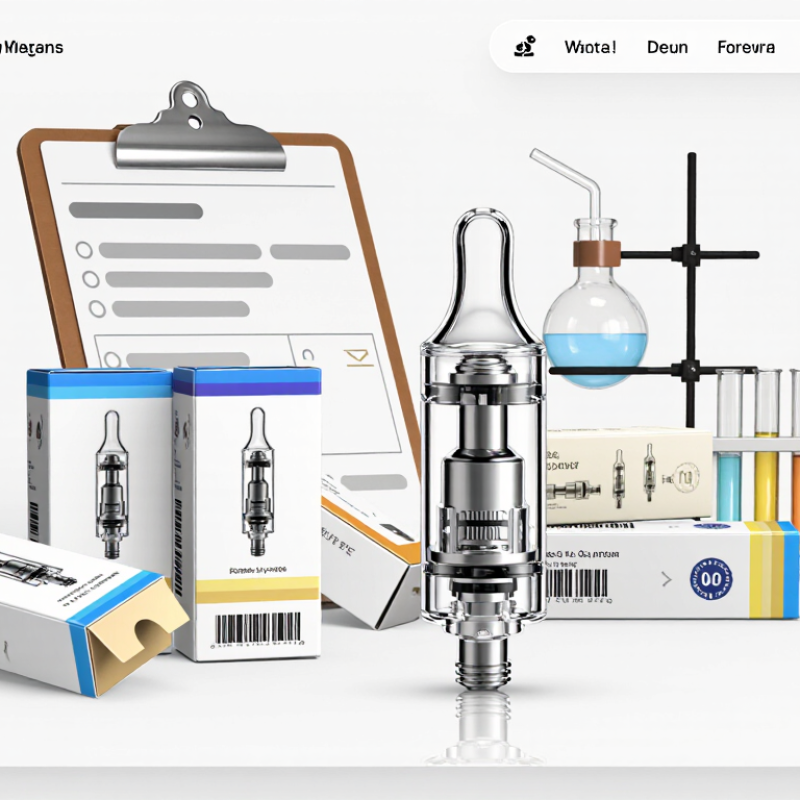
Start by identifying the cartridge’s format. A sealed, prefilled cartridge is not the same as a refillable tank. Check its connector, stated capacity, and compatibility information on the package; shape alone can mislead. Look for a clear product name, ingredient or material disclosures, batch or lot code, manufacturer contact details, and a readable date or freshness information. Keep the box nearby. Small print matters.
Read the label before handling or using the cartridge. The CDC and FDA’s 2024 National Youth Tobacco Survey reported 1.63 million U.S. middle and high school students currently used e-cigarettes; the figure does not describe cartridge contents, but it underlines why clear identification matters. A label is not a laboratory test. Treat missing, damaged, or contradictory information as a reason to pause, not guess. Compare the cartridge marking with its packaging, and do not rely on color or an informal online listing. If details remain unclear, contact the seller or manufacturer using independently verified contact information. Labels can be imperfect. That is worth remembering.
Identify the cartridge type and check its labeling against the applicable rules.
In the EU, nicotine-containing e-cigarette refill containers are limited to 10 mL, while cartridges and tanks are limited to 2 mL under Directive 2014/40/EU. These limits can help distinguish packaging types, but volume alone does not identify a cartridge’s contents. Check the product label for nicotine strength, ingredients, and batch information, and confirm the rules for your location.
A cartridge’s label is a useful first check, not proof of what is inside. Read the product name, ingredients, strength, net contents, and storage instructions. Then inspect the batch or lot number and the manufacturer’s contact details. They should be printed clearly, not covered by a sticker or blurred near the seam. Compare the batch number across the carton and cartridge; mismatches deserve a pause. The FDA and CDC’s 2023 National Youth Tobacco Survey counted 2.13 million current e-cigarette users among U.S. middle and high school students. That figure is not a cartridge-quality test, but it shows why clear identification matters in a crowded product market.
Tips: Photograph the label and batch code before opening the package. Check the manufacturer’s official contact channel for a matching batch notice or product record. A QR code can help, but it is not enough on its own; codes can be copied, and webpages may change. Look for a sealed package, consistent spelling, and a specific manufacturer address. If key details are missing, the code will not scan, or the package looks altered, do not guess. Set it aside and ask a qualified retailer or the manufacturer to verify it. Packaging can offer clues, not certainty.
Place the cartridge on a clean, dry surface and inspect it under bright, even light. Turn it slowly rather than squeezing it. Look for cracks in the glass or housing, loose joints, dents, and gaps around the mouthpiece or base. Even a hairline crack matters. It may leak or let debris enter.
Check the seal and packaging for signs of interference, such as a torn band, uneven closure, fresh tool marks, or parts that do not sit straight. Look for liquid on the outside, unexpected residue, or unusual cloudiness inside. A little condensation can be hard to judge, so do not treat one visual clue as proof of tampering. Compare the cartridge with its original packaging, if available.
A careful look has limits. It cannot confirm what the liquid contains or whether the cartridge is safe. Do not open it, taste it, or rely on smell to identify the contents. If you see damage, leakage, or a broken seal, set it aside and ask a qualified seller or service professional to inspect it. When uncertain, pause. I have found that small marks are easy to dismiss, but guessing is not a reliable check.
| Inspection Area | What to Look For | Possible Concern | Safer Next Step |
|---|---|---|---|
| Cartridge body | Check the glass or plastic housing under good light for cracks, chips, deep scratches, or separation at the seams. | A damaged housing may leak or allow contaminants to enter. | Do not use a cartridge with a crack, leak, or loose housing. Handle it carefully and follow local disposal guidance. |
| Mouthpiece | Look for a loose, crooked, cracked, or missing mouthpiece, and check for residue around its connection. | It may have been damaged, opened, or reassembled. | Avoid using it if the mouthpiece is loose, visibly altered, or cannot be cleaned according to its instructions. |
| Base and connection | Inspect the base for dents, corrosion, unusual tool marks, looseness, or residue around the joint. | These signs can indicate physical damage or possible interference with the cartridge. | Do not attach a visibly damaged or altered cartridge to a battery. |
| Seals and closures | Check for broken seals, disturbed adhesive, uneven gaps, or evidence that a closure has been removed and replaced. | A broken or inconsistent closure may mean the cartridge was opened or tampered with. | If the seal appears disturbed, do not use the product. Contact the seller or appropriate local consumer-safety authority. |
| Liquid appearance | Note the liquid’s color, clarity, and consistency. Look for unexpected particles, cloudiness, separation, or a sudden change in appearance. | Appearance alone cannot identify the liquid or confirm that it is safe; changes may have several causes. | Do not taste or test the liquid. If it looks unusual or differs from reliable product information, do not use it. |
| Leakage or residue | Look for wetness, sticky buildup, or residue around the mouthpiece, seams, and base. | A leak can signal a damaged cartridge and may expose skin or other surfaces to the liquid. | Avoid skin and eye contact. If contact occurs, wash the area with soap and water; seek medical advice if irritation or other symptoms develop. |
| Packaging and product information | Compare the cartridge with its packaging for a matching product description, intact packaging, and readable ingredient or contents information where required. | Missing, inconsistent, or altered information makes the contents harder to verify. | Do not rely on appearance alone. If information is missing or inconsistent, do not use the cartridge and seek guidance from a reliable source. |
| Overall condition | Check for signs of heat damage, discoloration, deformation, or a burnt or unusual odor without intentionally inhaling from it. | Heat or physical damage may affect the cartridge or its contents. | Do not use a cartridge that is deformed, overheated, or giving off an unusual odor. Keep it away from heat and children. |
Important: A visual inspection can reveal damage or possible tampering, but it cannot verify what a cartridge contains or establish that it is safe. Do not open, puncture, or taste the contents. When in doubt, do not use it.
How to Check What Is Inside a Vape Cartridge?
A Certificate of Analysis, or COA, is a laboratory report for a specific product batch. It can help you compare the cartridge’s listed ingredients with test results. Find the batch or lot number on the packaging, then check that the COA shows the same number. A mismatch matters. So does a report with no date or testing laboratory identified.
Read the ingredient section slowly. Look for clear names and amounts, not vague phrases such as “proprietary blend.” Check whether the listed carrier ingredients and flavorings match the COA. The report may also include screening for contaminants, such as unwanted residues or metals. Look for the test method, result, and detection limit; “pass” alone gives little detail. A QR code can be convenient, but verify that it leads to a complete report for the same batch.
A COA is useful, not a guarantee. It reflects the sample tested and the methods used, and it cannot prove every cartridge is identical. I’d pause if the document is hard to read or key details are missing. That takes a minute. Don’t dismantle a cartridge to inspect its contents; rely on traceable documentation and seek guidance from a qualified professional if the report is unclear.
A vape cartridge’s appearance cannot confirm its contents. Oil color, thickness, bubbles, or a printed label can look reassuring, but none proves what is inside or whether it was stored safely. Check the original sealed packaging for a clear product description, ingredient information, and a traceable batch or lot number. If details are missing, altered, or inconsistent, do not guess. Set it aside.
Do not pry open, puncture, heat, or taste an unfamiliar cartridge. Opening it can expose skin or eyes to liquid, damage the device, and cause leaks. Even a careful look through a clear chamber tells very little. I may sound overly cautious, but that is the point: appearance is not a reliable test. Avoid using it until its source and contents can be verified through dependable documentation or qualified support.
Keep the cartridge away from children and pets, and store it upright in its packaging while you seek guidance. If it is leaking, avoid direct contact; wash exposed skin with soap and water. If someone feels unwell after contact or use, contact a healthcare professional or local poison advice service promptly. A missing answer is a reason to stop, not experiment.
Check for glass or housing cracks, loose joints, dents, and gaps near the mouthpiece or base. Even a hairline crack matters.
Place it on a clean, dry surface under bright, even light. Turn it slowly; do not squeeze it. Small marks can be easy to dismiss.
Look for a torn band, uneven closure, fresh tool marks, or parts that sit crooked. Compare it with the original packaging if available.
No. Condensation can be difficult to judge, and one visual clue does not prove interference. Pause if something seems unusual.
Set the cartridge aside and ask a qualified seller or service professional to inspect it. Do not open or taste it.
A COA is a laboratory report for a specific batch. Match its batch number to the number on the packaging.
Look for ingredient names and amounts, the testing laboratory, report date, test methods, results, and detection limits. “Pass” alone gives little detail.
No. It describes the sample tested and the methods used, not every cartridge. That limitation is worth remembering.
Not by itself. Check that it opens a complete report for the same batch. If key details are missing, seek qualified guidance.
To understand what is inside a vape cartridge, first identify its type and read any available label. Check the packaging for a batch number, ingredient information, and manufacturer details, and make sure these match the information provided with the product. Clear, consistent labeling can help you assess whether the cartridge’s contents are described adequately, though a label alone cannot confirm what is inside.
Inspect the cartridge without opening it. Look for cracks, leaks, loose parts, unusual discoloration, or signs that the packaging has been disturbed. If a Certificate of Analysis is available, compare its product and batch details with the cartridge and review the listed ingredients. Do not open, modify, or use a cartridge if its contents are unclear or if it appears damaged or tampered with. When information cannot be verified, the safest choice is to set it aside and seek guidance from a qualified source.

Mist Vape